
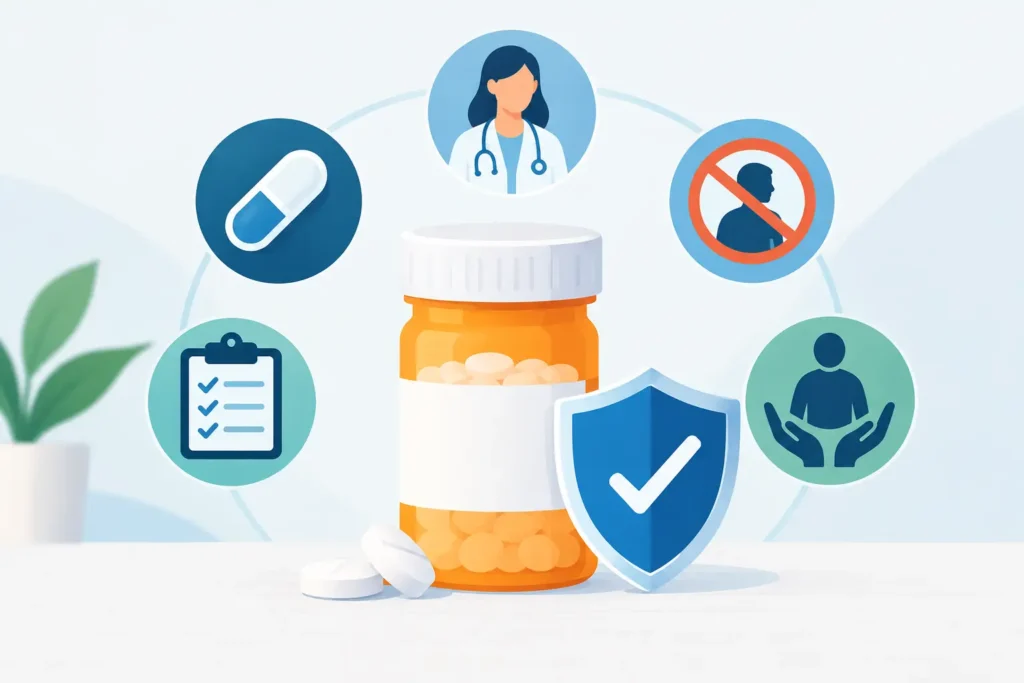
A pain flare can make fast relief feel like the only thing that matters. But opioid pain medicine safety starts before the first dose: know exactly what medication you have, why you are taking it, and which combinations can turn a routine dose into an emergency.
Prescription opioids can be effective for severe short-term pain and, in selected cases, ongoing pain. They can also slow breathing, impair judgment, cause dependence, and lead to overdose. The goal is not to fear pain medicine or suffer unnecessarily. It is to use the lowest effective amount for the shortest practical time, with clear information and no guesswork.
Opioid Pain Medicine Safety Starts With the Label
Oxycodone, hydrocodone, morphine, fentanyl, tramadol, and codeine are not interchangeable. Brand names can add another layer of confusion. For example, some combination tablets contain both an opioid and acetaminophen, while an extended-release opioid is designed to release medicine slowly over many hours.
Read the prescription label every time you receive a new fill. Check the medication name, strength, directions, and whether it is immediate-release or extended-release. If the tablet looks different than expected, do not assume it is the same. Ask a pharmacist before taking it.
Take the medicine exactly as prescribed. Do not take an extra dose because pain is intense, do not take doses closer together, and do not double up after a missed dose unless your prescriber specifically instructed you to do so. Pain can change from day to day, but changing an opioid dose without medical guidance can quickly raise the risk of serious sedation or slowed breathing.
Never crush, chew, split, dissolve, snort, or inject an opioid product unless a pharmacist confirms that the specific formulation can be altered. Breaking open an extended-release product may release too much medicine at once. That can be life-threatening.
Avoid the Combinations That Cause the Most Harm
The highest-risk mistakes often involve mixing medicines or substances that all slow the central nervous system. Alcohol, sleep medicines, benzodiazepines such as alprazolam or clonazepam, muscle relaxers, and other sedating drugs can intensify drowsiness and suppress breathing when combined with opioids.
This risk applies even if each product was prescribed. A person may have one prescription for pain, another for anxiety, and an over-the-counter sleep aid at home. The combination still needs review. Tell your prescriber and pharmacist about every prescription medicine, over-the-counter product, supplement, and recreational substance you use.
Be especially careful with acetaminophen. Many opioid combination products already contain it, and taking them alongside cold and flu medicines or additional acetaminophen can accidentally exceed a safe daily amount. Liver damage may not cause immediate warning signs.
Grapefruit and certain prescription medications can also affect how some opioids are processed. The answer depends on the exact medicine, dose, health history, and other treatments. When in doubt, check before combining anything rather than relying on a past routine or advice from a friend.
Know What Normal Side Effects Look Like
Constipation, nausea, dry mouth, itching, dizziness, and sleepiness are common opioid side effects. They are uncomfortable, but they are not always emergencies. A prescriber or pharmacist can help with practical options, including bowel routines for constipation, hydration, food timing, or a medication adjustment.
Drowsiness deserves extra attention, particularly during the first few days, after a dose increase, or when another medication has been added. Do not drive, use power tools, climb ladders, or make high-stakes decisions until you know how the medication affects you. Feeling “fine” is not the same as having normal reaction time.
Tolerance can develop, meaning a person may feel less pain relief or fewer sedating effects at the same dose over time. Tolerance does not mean it is safe to increase the dose independently. It also does not eliminate overdose risk. In fact, risk can rise sharply if someone stops opioids for a period and then returns to a previous dose.
Recognize an Opioid Overdose Fast
An overdose can happen with a first dose, after a medication change, or after long-term use. It is not always obvious. The key sign is breathing that becomes slow, shallow, irregular, or stops.
Call 911 immediately if someone cannot be awakened, has blue or gray lips or fingertips, makes gurgling or choking sounds, has pinpoint pupils, or is breathing very slowly. If naloxone is available, give it right away according to the product instructions. Naloxone can temporarily reverse an opioid overdose, but it does not replace emergency care. Stay with the person, follow dispatcher instructions, and give additional naloxone if instructed.
Consider keeping naloxone where household members can find it. This is particularly useful for people taking higher opioid doses, people who also use sedating medications, those with breathing conditions or sleep apnea, and households where opioids are present. Talk through where it is stored and how to use it before an emergency happens.
Store Opioids Like a High-Risk Medication
A bathroom cabinet, kitchen counter, purse, or unlocked nightstand is not secure storage. Children, teenagers, visitors, and pets can be harmed by a single pill. Keep opioid medicine in its original labeled container and store it in a locked location, out of sight and reach.
Do not share leftover medicine. A dose that was prescribed for one person can be dangerous for another person because of body size, medical conditions, tolerance, or other medications. Sharing is also a common path to accidental exposure and misuse.
When the medicine is no longer needed, dispose of it promptly through an approved take-back option when available. If a take-back option is not accessible, follow the medication instructions from a pharmacist or the product label. Avoid holding onto old opioids “just in case.” Unused pills create risk without providing a reliable pain plan.
Keep Your Care Team Informed
Safe pain care works better when one clinician and one pharmacy can see the full picture whenever possible. That makes it easier to identify duplicate prescriptions, unsafe overlaps, dose changes, and refill problems before they become dangerous.
Be direct about your pain level and your response to treatment. If the medication is not helping, wears off too quickly, causes side effects, or makes you feel unlike yourself, say so. The answer may be a different dose, a non-opioid option, physical therapy, a procedure, counseling for pain coping, or a change in the treatment plan. It depends on the cause of pain and your overall health.
Also mention conditions that can increase opioid risk, including sleep apnea, lung disease, kidney or liver problems, pregnancy, a history of substance use disorder, depression, or past overdose. These conversations are about safer care, not judgment.
When Pain Relief Starts Feeling Hard to Control
Needing more medicine than prescribed, running out early, thinking constantly about the next dose, or taking opioids for stress or sleep rather than pain are signals to discuss promptly with a clinician. They do not define your character. They may indicate that the treatment plan needs to change or that support for opioid use disorder could help.
Do not stop long-term opioid use suddenly without medical advice unless emergency professionals tell you otherwise. Abrupt stopping can trigger withdrawal symptoms such as anxiety, sweating, body aches, nausea, diarrhea, and intense cravings. A planned taper may be safer and more manageable.
Pain deserves serious treatment, and so does medication safety. Keep the label close, avoid sedating combinations, secure every dose, and ask questions early. A brief conversation before taking the next pill can protect the relief you need and the life you are trying to get back to.