
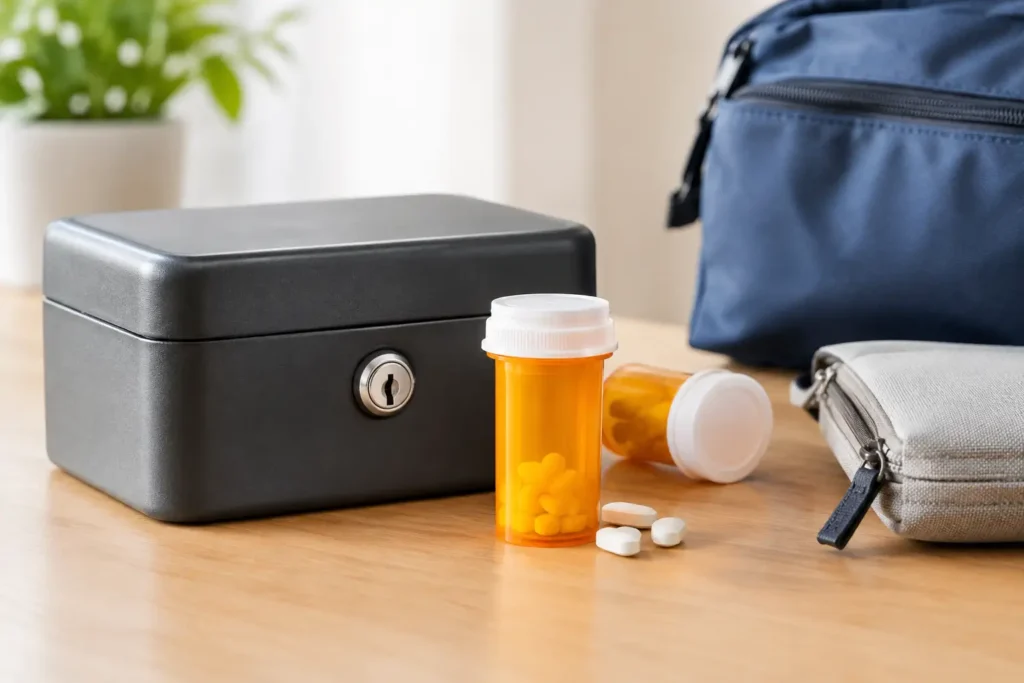
A prescription opioid can relieve serious pain, but one unsecured bottle can create a risk in minutes. Learning how to store opioids safely protects children, teenagers, visitors, pets, and anyone in your household who could take medication by mistake or without permission. The goal is simple: keep your medicine available to you when prescribed, and inaccessible to everyone else.
Opioids include prescription pain medicines such as oxycodone, hydrocodone, morphine, codeine, fentanyl, and combination products that may also contain acetaminophen. Because even a single dose can be dangerous for someone it was not prescribed for, storage is part of using the medication responsibly.
How to Store Opioids Safely Every Day
The most reliable option is a locked medication box, locking cabinet, or small safe that only you can access. Choose a location that is dry, out of sight, and not easy for children or guests to reach. A lockbox kept in a private closet, locked drawer, or secured cabinet is generally a better choice than a bathroom medicine cabinet.
Bathrooms are convenient, but they are not ideal for medication storage. Steam and moisture from showers can affect medicines over time. Kitchen counters, bedside tables, purses, backpacks, glove compartments, and open drawers are also poor choices. They make it easy for someone to find a bottle during a brief moment alone.
Keep opioids in their original pharmacy container whenever possible. The original label identifies the patient, dose, directions, prescription number, and expiration information. Moving pills into an unmarked container can lead to dosing mistakes, especially if more than one person in the home takes medication.
A few practical rules make a real difference:
- Lock the medicine up immediately after every use, not at the end of the day.
- Keep the key, combination, or access code private.
- Store only the amount currently needed at home when possible.
- Count tablets or check the liquid level regularly, particularly if visitors, caregivers, or teenagers have access to your home.
- Never leave a dose on a counter, in a weekly pill organizer, or beside a bed where a child or pet could reach it.
A pill organizer may be useful for some medications, but it can be less secure for opioids. If you need one for dosing support, prepare only a short supply and keep the organizer locked between doses. If memory issues make medication management difficult, ask a trusted caregiver to help while still protecting your privacy and independence.
Make a Plan for Children, Teens, and Visitors
Many accidental poisonings happen when a child finds medicine that was left within reach. Children may mistake pills for candy, while teens and adults may be tempted by medications they find in a family member’s room, bag, or cabinet. A home can feel private, but contractors, house cleaners, overnight guests, relatives, and friends may all pass through it.
You do not need to alarm everyone in your household. You do need clear boundaries. Tell children that medicine is not candy and should only be given by a parent, guardian, or trusted adult. Tell teenagers directly that prescription pain medicine can cause overdose, dependence, and legal trouble when used by anyone other than the person it was prescribed for.
Avoid discussing where the medication is stored in front of guests. If someone regularly helps with your care, decide in advance how they will access the medicine and how doses will be documented. This is especially useful after surgery or during a painful injury, when fatigue and discomfort can make it harder to track doses accurately.
If you believe pills are missing, do not ignore it. Recount the medication, secure it in a new location, and contact the prescribing clinician or pharmacist for guidance. If there is an immediate concern that someone may have taken opioids, seek urgent medical help or contact Poison Control right away.
Store Opioids Safely While Traveling
Travel adds another layer of risk because bags are misplaced, hotel rooms are shared, and routines change. Keep opioids in the labeled original container and carry them with you rather than placing them in checked luggage. A carry-on bag or personal item that stays in your possession is usually safer.
Do not leave medication in a parked car. Extreme heat and cold may damage some products, and a visible prescription bottle can attract theft. At a hotel, keep the medication in a portable lockbox or locked suitcase. If the room has a safe, consider whether it is secure and reliable enough for your needs, but remember that a portable lockbox under your control may offer more consistency.
For air travel, bring only the amount needed for the trip plus a small buffer in case travel is delayed. Keep your prescription details available in case a security or medical question arises. International travel can involve separate medication rules, so check destination requirements before leaving the United States. The right approach depends on the destination, length of travel, and the type of opioid prescribed.
Separate Emergency Supplies From the Opioid
If you have been prescribed naloxone, keep it somewhere quickly accessible and make sure people close to you know where it is and how to use it. Naloxone is used to reverse an opioid overdose. Unlike the opioid itself, it should not be locked away in a place that delays access during an emergency.
Talk with household members or trusted friends about overdose warning signs: unusual sleepiness, inability to wake up, slow or stopped breathing, blue or gray lips, or pinpoint pupils. If an overdose is suspected, call 911 immediately, give naloxone if available, and stay with the person until help arrives.
Safe storage reduces risk, but it does not replace safe use. Take opioids only as directed, do not combine them with alcohol or sedating medications unless your prescriber specifically says it is safe, and never share a prescription. A different dose, body size, health condition, or medication combination can turn another person’s “one pill” into a medical emergency.
What to Do With Leftover Opioids
Do not save unused opioids indefinitely “just in case.” Leftover pain medication is one of the most common sources of nonmedical use in homes. Once your treatment is complete or the medication is no longer needed, remove it promptly.
A permanent medication take-back location or community take-back event is generally the best option. These programs are designed to handle unused medications safely and reduce the chance that drugs are found in the trash, stolen, or used accidentally. Some pharmacies and health care facilities also offer disposal options.
If a take-back program is not available, follow the disposal instructions on the medication label or patient information. Certain medicines have specific disposal recommendations because of their overdose risk. Do not flush medication automatically, and do not simply toss a full bottle into household trash unless the product instructions or a pharmacist tells you how to do so safely.
Before disposal, remove or cover personal information on the prescription label. This helps protect your privacy. Keep in mind that empty bottles can still reveal the medication name and patient details.
When Storage Needs Change
Your storage plan may need to change after surgery, during a move, when children visit, or when a new caregiver begins helping at home. Reassess whenever your routine changes. The right setup is the one you will use consistently, even on a difficult day.
A locked box, original labeled container, private storage location, and regular pill count are straightforward safeguards that can prevent a life-changing mistake. Treat opioid storage with the same care as the prescription itself: use it only as directed, secure it after every dose, and remove it from your home as soon as it is no longer needed.