
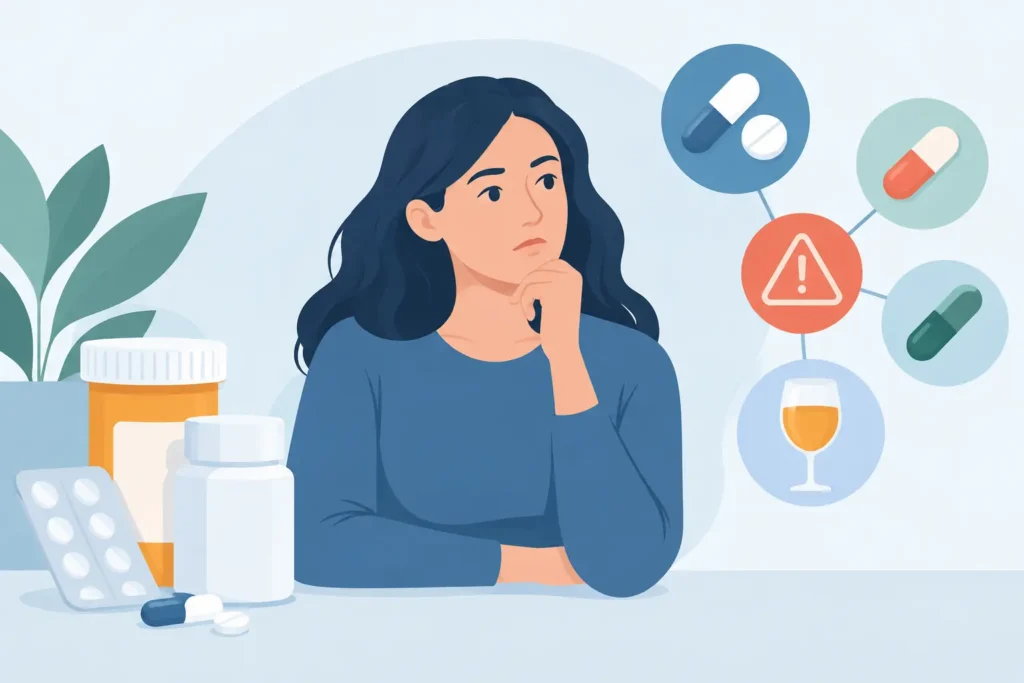
A new prescription is not the only thing that can change how you feel. A sleep aid taken at bedtime, a cold medicine from the pharmacy aisle, alcohol at dinner, or a supplement labeled “natural” can all affect anxiety medication interactions. Some combinations only increase side effects. Others can slow breathing, raise heart rate, trigger confusion, or make a medication less effective.
The safest approach is simple: keep one current list of every prescription, over-the-counter product, vitamin, herbal supplement, and recreational substance you use. Share it with the clinician who prescribes your medication and the pharmacist who fills it. Do not assume a product is safe because it is common, sold without a prescription, or used by someone else.
Why anxiety medication interactions happen
Anxiety medications do not all work the same way. Benzodiazepines such as alprazolam, clonazepam, lorazepam, and diazepam slow activity in the central nervous system. Antidepressants often used for anxiety, including SSRIs and SNRIs, change serotonin and other brain chemicals over time. Buspirone works differently again, and beta blockers may be used for certain physical symptoms such as shaking or a racing heart.
An interaction can occur when two substances have similar effects, such as two products that cause drowsiness. It can also happen when one medication changes how quickly the body processes another. The result depends on the specific drugs, doses, timing, age, liver or kidney health, alcohol use, and other medical conditions. That is why a medication combination that is appropriate for one person may be risky for another.
Anxiety medication interactions with alcohol and opioids
Alcohol is one of the most serious concerns for people taking sedating anxiety medications. Combining alcohol with benzodiazepines can intensify sleepiness, poor coordination, memory problems, impaired judgment, and slowed breathing. The danger rises with larger amounts of alcohol, higher medication doses, or additional sedating drugs.
Opioid pain medicines create an even more serious risk when combined with benzodiazepines or other sedatives. Opioids can slow breathing on their own. Adding alprazolam, clonazepam, lorazepam, sleep medications, alcohol, or certain muscle relaxers can compound that effect. A person may appear to be simply asleep when they are actually experiencing a life-threatening overdose.
Do not take an opioid and a benzodiazepine together unless the prescriber who knows your full medication history has specifically directed it. If both are prescribed, ask exactly when to take each medication, what symptoms require urgent help, and whether naloxone should be available in the home.
Call 911 right away if someone is difficult to wake, breathing slowly or irregularly, has blue or gray lips, collapses, or becomes severely confused after taking a medication or substance.
Sedatives, sleep aids, and antihistamines
Many products that seem unrelated to anxiety can add to sedation. Prescription sleep medicines, some muscle relaxers, and older antihistamines used for allergies or sleep can all cause drowsiness. Diphenhydramine and doxylamine are common examples found in some nighttime allergy, cold, and sleep products.
The issue is not always an immediate emergency. Combined sedation can also lead to falls, driving accidents, missed doses, poor work performance, or memory gaps. Older adults and people with sleep apnea, chronic lung disease, or balance problems may be especially vulnerable.
Read combination cold and flu labels carefully. A single product may contain an antihistamine, pain reliever, cough suppressant, and decongestant. Taking more than one product for a cold can accidentally double up on ingredients.
Driving and everyday safety
Until you know how a medication affects you, avoid driving, operating machinery, climbing ladders, or making decisions that require quick reactions. Feeling “fine” is not always a reliable measure of impairment, especially with medications that affect coordination and memory.
If a prescriber has told you to use an anxiety medication only as needed, do not add an extra dose because stress is unusually high without checking first. More medication can mean more sedation, not better control.
SSRIs, SNRIs, and serotonin-related risks
SSRIs and SNRIs are commonly prescribed for generalized anxiety, panic disorder, social anxiety, and related conditions. These medications are not usually associated with the same respiratory-depression risk as benzodiazepines, but they still have meaningful interactions.
Taking multiple serotonin-raising substances can rarely lead to serotonin syndrome, a potentially serious reaction. Possible contributors include certain antidepressants, migraine medicines called triptans, tramadol, linezolid, lithium, dextromethorphan in some cough suppressants, and the herbal product St. John’s wort.
Symptoms can range from mild to severe. Seek urgent medical advice for unusual agitation, fever, heavy sweating, diarrhea, muscle stiffness, shaking, severe restlessness, or confusion, particularly after starting a new medication or increasing a dose. Severe symptoms need emergency care.
Do not stop an SSRI or SNRI suddenly just because you are worried about an interaction. Sudden discontinuation can cause uncomfortable withdrawal-like symptoms and a return of anxiety. Contact the prescriber or pharmacist promptly so they can advise on the safest next step.
Stimulants, decongestants, and anxiety symptoms
Some substances do not create sedation but can make anxiety symptoms feel stronger. Prescription stimulants may increase heart rate, blood pressure, shakiness, or insomnia in some people. Decongestants such as pseudoephedrine and phenylephrine can have similar effects, particularly in people who are sensitive to stimulants or have blood pressure concerns.
Caffeine also matters. Coffee, energy drinks, pre-workout products, and certain headache medicines can worsen jitteriness, panic sensations, or trouble sleeping. This does not mean everyone with anxiety must avoid caffeine completely. It means the amount, timing, and your own symptom pattern matter.
If anxiety suddenly feels worse after starting a new product, do not assume your prescribed anxiety medication has stopped working. Check whether you have added caffeine, nicotine, a decongestant, a stimulant, or a supplement that could be contributing.
Supplements are not automatically low-risk
Herbal and “wellness” products deserve the same caution as prescriptions. St. John’s wort can interact with many medications, including antidepressants, birth control, blood thinners, and some pain medicines. Kava, valerian, CBD products, and melatonin may add to drowsiness for some people, especially when combined with sedating anxiety or sleep medications.
Supplement labels may not always reflect exact ingredients or strength. Tell your clinician and pharmacist about products you take only occasionally as well as those you use every day. That includes gummies, teas, powders, drops, and products marketed for stress, sleep, focus, or mood.
What to do before adding or changing a medication
The best time to check for an interaction is before taking the first dose. Bring your complete medication list to appointments and use the same pharmacy when possible, since the pharmacy record can help flag problems.
When you receive a new prescription or want to use an over-the-counter product, ask three practical questions: Can I take this with my current medications? Should I separate the doses? What warning signs mean I should call for help? These questions are especially useful if you take medication for pain, sleep, ADHD, depression, seizures, heart conditions, or substance use treatment.
Never share anxiety medication, use someone else’s prescription, or mix a medication with alcohol or other drugs to change how it feels. Medications such as benzodiazepines can also cause physical dependence when taken regularly. If you have been using one consistently, work with a prescriber on a taper plan rather than stopping abruptly.
A pharmacist can often answer interaction questions quickly, including questions about a cough syrup, allergy medicine, supplement, or missed dose. If you develop severe sleepiness, breathing changes, fainting, chest pain, severe confusion, or thoughts of self-harm, seek emergency help instead of waiting for a routine callback.
Your anxiety treatment should make daily life safer and more manageable, not leave you guessing about what can be mixed with what. A quick medication review before you add something new is one of the simplest ways to protect that progress.