
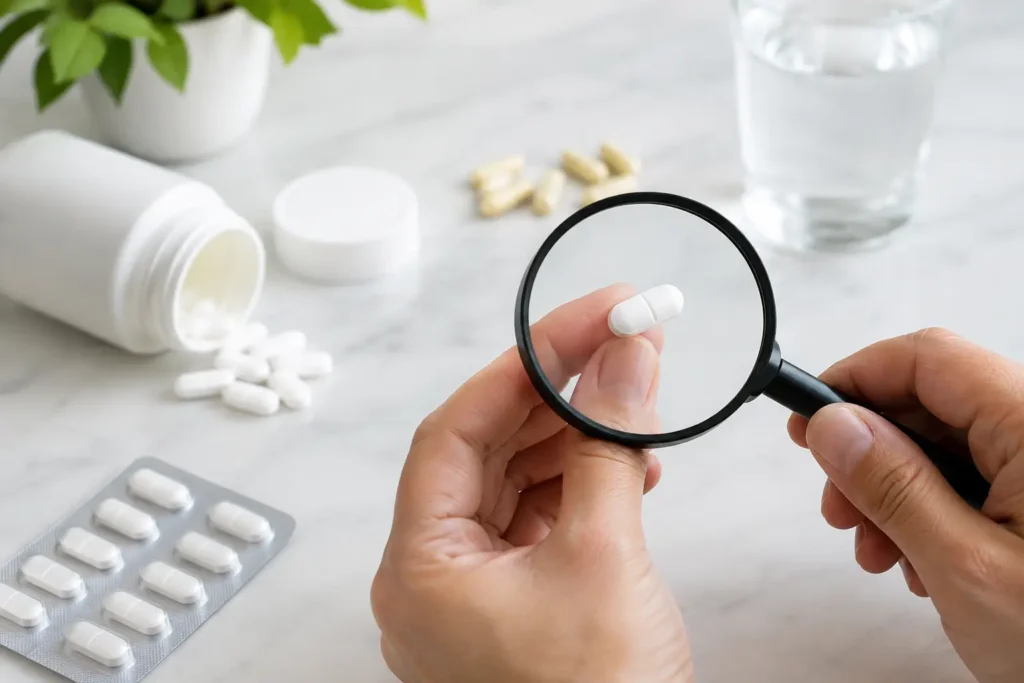
A tablet can look exactly like a familiar medication and still contain the wrong drug, an unsafe dose, or no active ingredient at all. Learning how to identify counterfeit pills can help you pause before taking a medication that puts your health at risk. The most useful rule is simple: do not rely on appearance alone. Counterfeit pills are often designed to look convincing.
Why counterfeit pills are so dangerous
Counterfeit medication is not merely old, discounted, or made by a different manufacturer. It is a product that has been deliberately misrepresented. It may be sold under the name of a legitimate prescription drug while containing unknown ingredients, incorrect strengths, or dangerous substances.
The risk is especially serious with medications commonly used for pain, anxiety, sleep, or attention. A pill sold as oxycodone, Xanax, Adderall, Percocet, or another recognized medication may contain fentanyl or another potent substance instead. Even a very small amount can cause a life-threatening overdose in someone who does not expect it.
There is no reliable home test based only on color, shape, taste, or a photograph. A pill that seems normal can still be unsafe. Think of visual checks as warning signs, not proof that a medication is genuine.
How to identify counterfeit pills by checking the source
The place a medication comes from often tells you more than the pill itself. Legitimate prescription medications should come through a licensed pharmacy after a valid prescription from an appropriately licensed clinician. A seller that skips those safeguards is a major red flag.
Be cautious when a website, social media account, messaging app, or individual offers prescription-only medications without requiring a prescription. Other warning signs include unusually low prices, pressure to buy immediately, promises of unrestricted international shipping, or payment requests through cryptocurrency, gift cards, wire transfers, or peer-to-peer payment apps.
A trustworthy pharmacy should provide clear business information, a way to contact a pharmacist, and prescription verification. If you cannot confirm who is dispensing the medication, where it is located, or whether it is licensed in the United States, do not assume the product is safe.
Privacy and convenience matter, but they should never replace basic medication safeguards. A fast checkout process is not evidence that a product is authentic.
Inspect the packaging before opening it
Authentic medication packaging is not always identical because manufacturers, pharmacies, and insurers may use different bottles or labels. Still, packaging can reveal problems that deserve a closer look.
Check whether the label includes the patient name, prescribing information, pharmacy name and phone number, prescription number, fill date, medication name, strength, quantity, and clear directions. Look for blurry printing, spelling errors, missing details, mismatched medication names, broken safety seals, or labels that appear to have been placed over another label.
The bottle should not look reused, damaged, poorly sealed, or improvised. Loose pills in an unmarked bag, a plain envelope, or a container with no prescription label should be treated with caution. If the medication arrived in packaging that differs from what you expected, contact the dispensing pharmacy before taking it.
Do not assume a sealed package guarantees authenticity. Counterfeiters can copy bottles, blister packs, labels, logos, and shrink wrap. Packaging concerns are a reason to stop and verify, not a reason to compare products casually and continue.
Check the pill, but do not trust looks alone
Many legitimate tablets and capsules have an imprint, a combination of letters, numbers, symbols, or a logo that identifies the drug and manufacturer. Missing or poorly formed imprints can be concerning. So can tablets with uneven edges, crumbling surfaces, unusual odor, inconsistent color, strange spotting, or different shapes within the same bottle.
If you have previously received the same medication from a pharmacy, a sudden difference may be worth asking about. However, legitimate generic substitutions can look very different from brand-name products. A change in color or shape is not automatically proof of a counterfeit pill.
The better question is whether the change can be verified by the pharmacy that filled the prescription. Call the phone number printed on the pharmacy label, not a number provided by an unfamiliar seller. A pharmacist can explain whether a manufacturer or appearance change is expected and advise you on what to do next.
Do not use taste, texture, or online photos as tests
Do not taste, crush, split, smoke, or dissolve an unfamiliar pill to see whether it seems real. Those actions can expose you to a dangerous amount of an unknown drug. Online pill photos may also be inaccurate, outdated, or intentionally misleading.
A pill-identification tool can sometimes help confirm an imprint and physical description, but it cannot establish that the tablet in your hand contains the ingredients it claims to contain. Only qualified laboratory testing can do that with certainty.
Red flags when buying medication online
Online pharmacy services can be legitimate, but counterfeit operations often copy the language and appearance of real healthcare businesses. Slow down when you see claims that sound too easy for a prescription medication.
Watch for these signs:
- No prescription is requested for a prescription-only medication.
- The seller offers controlled medications directly through social media, chat apps, or informal messages.
- Prices are dramatically lower than normal without a clear explanation.
- The site has no verifiable pharmacist contact, physical address, or licensing details.
- The seller promises guaranteed delivery while avoiding questions about prescriptions or medical history.
- Product pages make sweeping quality claims but provide no meaningful dispensing or pharmacy information.
A professional-looking website, positive reviews, branded product images, and secure-payment badges can all be copied. Evaluate the pharmacy itself, not just the design of the storefront.
What to do if you suspect a counterfeit pill
Do not take the medication. Set it aside where children, pets, and other people cannot access it, and do not give it to someone else. Keep the bottle, packaging, receipt, and any shipping materials because they may help a pharmacist or regulator investigate the product.
Contact the pharmacy listed on the prescription label or speak with a pharmacist at a licensed local pharmacy. They can help review the packaging, imprint, and fill information. If the medication came from an unverified source, do not depend on that seller to confirm that it is safe.
If someone has taken a suspicious pill and becomes difficult to wake, has slow or stopped breathing, turns blue or gray around the lips, collapses, or has a seizure, call 911 immediately. If opioid exposure is possible and naloxone is available, use it according to the product instructions while waiting for emergency help. Naloxone will not harm someone if opioids are not involved, and multiple doses may be needed in a fentanyl-related overdose.
You can also report suspected counterfeit medication to the FDA, local law enforcement, or the appropriate state pharmacy regulator. Reporting helps identify patterns, remove dangerous products, and warn others before more harm occurs.
Safer habits for every refill
Use one pharmacy when possible, keep medications in their original labeled containers, and review each refill before taking the first dose. If the pill looks different, ask why. If the instructions, strength, or quantity are not what your clinician prescribed, stop and get clarification.
Never share prescription medication or buy pills from friends, acquaintances, social media contacts, or unknown online sellers. The fact that another person has taken a pill without a visible problem does not mean the next tablet contains the same ingredients or dose.
When something feels off, treat that hesitation as useful information. A few minutes spent verifying a medication can protect you from a risk that no bargain, convenience promise, or familiar-looking tablet is worth taking.