
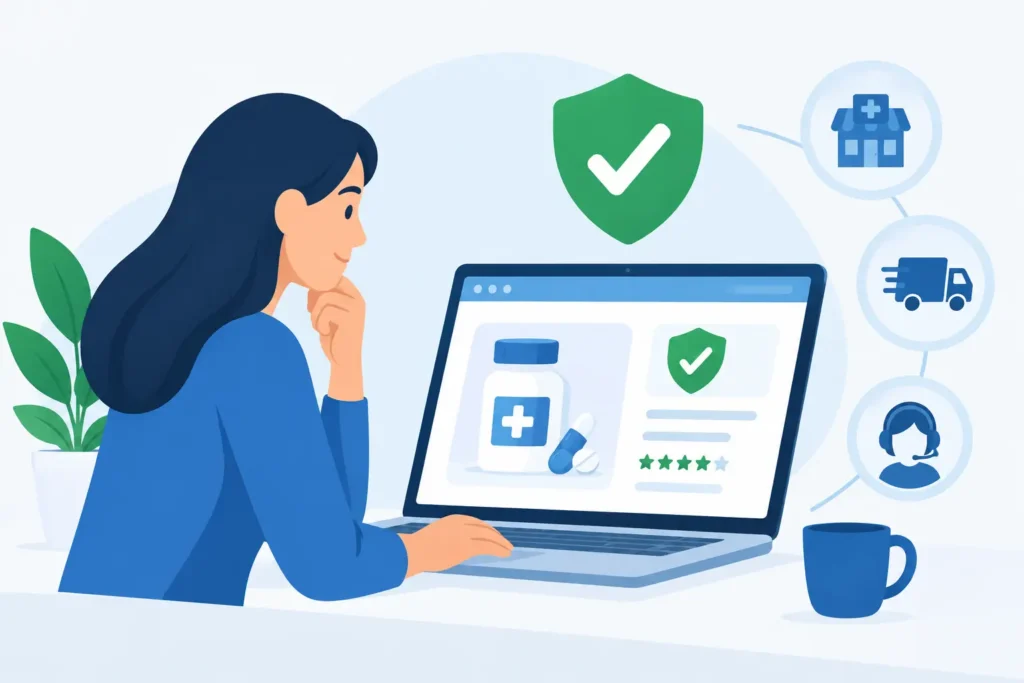
A low price, overnight shipping promise, and a familiar medication name can make an online pharmacy look convincing. But when a site offers prescription drugs without asking for a valid prescription, the convenience is not a benefit – it is a warning sign. Knowing how to verify an online pharmacy helps protect your money, your private health information, and, most importantly, your health.
Prescription medication is not a standard retail product. The correct drug, dose, and directions depend on your diagnosis, current medications, allergies, health history, and the laws where you live. That is especially true for controlled medications used for ADHD, anxiety, sleep, pain, or opioid-use treatment. A legitimate pharmacy makes room for those safeguards. A questionable one tries to rush past them.
Start With the Pharmacy License
A real U.S. pharmacy is licensed by a state board of pharmacy. Before placing an order, look for the pharmacy’s legal business name, physical address, phone number, pharmacist contact information, and state license details. Do not rely only on a logo, a badge, or a statement such as “reliable pharmacy.” Those claims are easy to copy.
Use the state board of pharmacy’s license lookup to confirm that the license is active and matches the name and address shown on the website. If the pharmacy says it operates in several states, verify the location that is actually filling or shipping the prescription. A legitimate business should not make its location difficult to find.
You can also check whether the site is recognized through the National Association of Boards of Pharmacy’s .pharmacy program. The FDA’s BeSafeRx resources can help consumers identify warning signs and locate information about safely buying medicines online. These checks take a few minutes and can prevent an expensive, risky mistake.
How to Verify an Online Pharmacy’s Prescription Rules
A legitimate pharmacy requires a prescription from a licensed clinician for prescription-only medication. It may receive that prescription electronically from your prescriber, accept a transfer from another pharmacy, or provide a lawful process for a clinician to evaluate you through telehealth. What it will not do is sell prescription medication simply because you selected a strength, added it to a cart, and entered payment details.
Be particularly careful with medications that are federally controlled substances, including many stimulants, benzodiazepines, opioid pain medicines, and certain sleep medications. These drugs have additional federal and state requirements because misuse, counterfeit products, dangerous interactions, overdose, and dependence can cause serious harm. A site that promises no prescription, no doctor, or guaranteed approval for these medicines should be avoided.
An online questionnaire is not automatically illegitimate, but it is not proof that a pharmacy is safe. The key questions are whether a properly licensed clinician reviews your information, whether the service follows the laws in your state, and whether the dispensing pharmacy is licensed. If the process feels designed to avoid clinical review rather than support it, stop there.
Look for Access to a Pharmacist
Before an order is dispensed, you should be able to speak with a licensed pharmacist and ask questions without pressure. A real pharmacy can explain basic information about directions, storage, missed doses, possible interactions, side effects, and when to contact your prescriber.
This matters if you take multiple medicines. Combining opioids with benzodiazepines, alcohol, or other sedating drugs, for example, can dangerously slow breathing. Stimulants can interact with certain medications and may not be appropriate for people with particular heart conditions. A trustworthy pharmacy does not diagnose you, but it does provide a path to professional medication counseling.
If customer support is limited to a generic chat agent, a form with no response, or a messaging account that will not identify the pharmacy or pharmacist, treat that as a serious concern. Fast ordering is useful. Being unable to get a medication question answered is not.
Check the Medication Details, Not Just the Product Name
Counterfeit medicines can look remarkably close to genuine products. A familiar brand name on a product page does not prove that the pills are authentic, safely stored, or legally sourced. Review the medication details before you order and again when the package arrives.
A legitimate pharmacy should be able to identify the manufacturer, drug name, strength, dosage form, quantity, and prescription label information. The package should include patient-specific labeling and pharmacy contact details. Be cautious if pills arrive loose, in unmarked containers, with labels that contain spelling errors, or with packaging that does not match the medication description.
Price can offer a useful clue, although it is not the only one. Discounts, coupons, and generic options are common. Prices that are dramatically lower than every other pharmacy, especially for high-demand controlled medication, should prompt more verification. Counterfeit sellers often use steep discounts to create urgency and discourage questions.
Review Payment, Privacy, and Shipping Policies
A secure checkout alone does not make a pharmacy legitimate, but unsafe payment methods are a clear red flag. Be cautious when a seller demands cryptocurrency, wire transfers, gift cards, payment apps to an individual, or other hard-to-reverse payments. Legitimate pharmacies typically provide clear billing information and standard payment options.
Read the privacy policy before sharing your health history, identification, insurance information, or prescription details. The policy should explain how your information is collected, used, protected, and shared. Vague language, missing contact information, or no privacy policy at all is reason to leave the site.
Shipping claims deserve the same scrutiny. Prescription medicines may require temperature control, signature confirmation, or shipping restrictions. A pharmacy should not promise to ship any medication anywhere without regard to local law. For controlled substances, rules can be stricter, and availability may depend on your state, your prescription, and the pharmacy’s authority to dispense there.
Red Flags That Mean Do Not Order
No single clue always proves a site is fraudulent, but several warning signs together are enough to walk away. Do not place an order if the pharmacy offers prescription drugs with no valid prescription, hides its physical location, refuses pharmacist access, or cannot show a verifiable license.
Other major red flags include pressure tactics such as countdown timers for medication, claims of guaranteed results, exaggerated promises of “best quality” without verifiable credentials, and product listings that treat controlled medicines like ordinary retail items. Watch for poor grammar in safety documents, copied photos, inconsistent business names, and a customer service team that will not answer direct licensing questions.
Be skeptical of online reviews, too. Reviews can be manipulated, and a page filled with five-star comments does not replace licensing verification. Independent confirmation from regulators matters more than testimonials.
What to Do if You Are Unsure
If a pharmacy does not pass your checks, do not try to negotiate, send additional personal documents, or place a small “test” order. Choose a verified local pharmacy or a licensed mail-order pharmacy connected to your insurer, health system, or prescriber instead. Your clinician may also be able to recommend a reputable option for your medication and location.
If you believe you received counterfeit, damaged, or improperly labeled medication, do not take it. Contact your prescriber or pharmacist for guidance, and report the concern to the FDA or your state board of pharmacy. If you have taken a medication and develop severe symptoms, seek urgent medical help or contact Poison Control.
Convenience should make legitimate care easier, not remove the protections that keep medication use safer. Take a moment to verify the pharmacy before you buy – the right seller will make that decision easy to support.